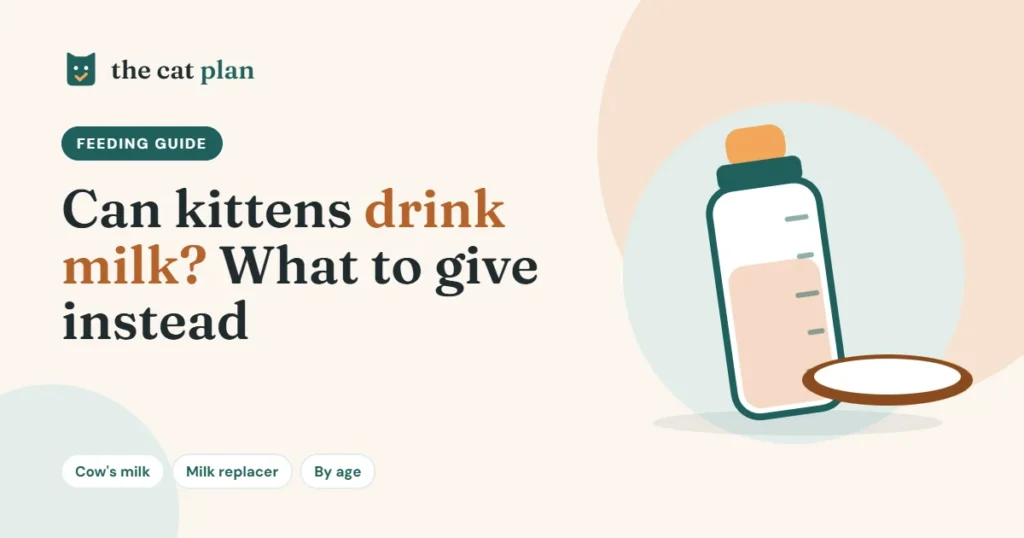
Kittens can drink their mother’s milk or a commercial kitten milk replacer, but not cow’s milk, goat milk or plant milks. Cow’s milk can cause diarrhea and does not match a growing kitten’s needs. After weaning, at about 8 weeks, kittens need complete kitten food and fresh water, not milk.
- Only mother’s milk or a commercial kitten milk replacer suits a kitten that is still nursing.
- Cow’s milk has the wrong nutrient balance for kittens and can cause diarrhea and dehydration in small ones.
- Goat milk is not recommended as a kitten’s main milk; International Cat Care says never to use it.
- We found no vet source recommending almond, oat or soy milk for kittens, and several say no.
- Never force milk or feed a kitten on her back; inhaling milk can cause severe illness.
- Weaned kittens (about 8 weeks) do not need milk, just kitten food and fresh water.
- If a kitten has diarrhea after milk, call your vet the same day.
It is one of the most common kitten questions, and the picture of a kitten lapping milk from a saucer is a very old one. So it surprises many new owners to learn that the answer is mostly no. Kittens do need milk in their first weeks. It just has to be the right milk.
This guide goes further than the short answer in our post on what kittens eat. It covers why age matters, why cow’s milk and goat milk are poor matches, what to give instead, and what the sources say (and do not say) about almond, oat and soy milk. You will also find a by-age table, a side-by-side milk options table, and clear steps if your kitten has already had a few laps.
We are a research site, not vets. Every claim below comes from a veterinary or animal-welfare source linked at the end, and where those sources disagree or say nothing, we say so. If a kitten is very young, has diarrhea, or seems unwell, talk to your vet.
Can kittens drink milk? The answer by age
Which milk, and how much, depends on how old the kitten is. Ages are approximate because sources differ by a week or so. Watch the kitten rather than the calendar.
| Age | Milk | Other drinks and notes |
|---|---|---|
| Birth to about 3 weeks | Mother’s milk, or a kitten milk replacer if there is no mother | Milk is the whole diet. Cow’s milk is not a substitute. |
| About 3 to 4 weeks | Mother’s milk or replacer, plus a first taste of soft food | International Cat Care starts weaning at 3 to 4 weeks, with replacer offered in a flat, shallow dish. Purina and Petfinder say kittens start lapping water around 4 weeks. |
| About 5 to 7 weeks | Falling amounts of replacer as solid food takes over | Best Friends swaps water in for formula when mixing gruel from week 5, and keeps a dish of water out from week 4. |
| About 8 weeks | Most kittens are fully weaned (International Cat Care) | Wet and dry kitten food, plus fresh water. |
| 8 weeks and older | No milk needed | A vet writing for PetsRadar says kittens do not need milk once weaned, which she puts at 8 to 10 weeks. |
In short: before weaning, only mother’s milk or a kitten milk replacer. After weaning, water and a complete kitten food. Cow’s milk has no place in either column. You will find the weaning stage in more detail in our weaning timeline.
Lactose, lactase and age: why milk gets harder to digest
Milk contains a sugar called lactose. To digest it, the body needs an enzyme called lactase. Kittens make some lactase while they nurse. The PetPlace article by Lauren Smith says kittens produce lactase on their mother’s milk, and that most adult cats make too little lactase after weaning to digest lactose well.
Petfinder quotes a Nestlé Purina veterinarian, Dr. Taylor Francis, who says lactase declines after weaning, so most adult cats cannot digest milk well (Petfinder). Tufts nutritionist Dr. Cailin Heinze tells Vetstreet the same thing: the amount of lactase the body makes declines after weaning (Vetstreet).
Vetstreet explains that undigested lactose draws water into the intestine, which can cause diarrhea, and can ferment in the gut, causing bloating and gas.
One wrinkle is worth being honest about. Kittens do make lactase, so a kitten is not simply “lactose intolerant” in the way the myth suggests. Petfinder’s vet puts it this way: kittens produce some lactase before weaning, but cow’s milk is still too high in lactose for their sensitive digestion. Other pages simply say kittens are lactose intolerant. Either way, the practical advice matches: use kitten milk replacer, not cow’s milk.
We found no veterinary source that gives a precise week when lactase falls, so we will not guess one.
How much should your kitten eat?Get daily calories, portions and a feeding schedule for your kitten’s exact age and weight.
Why cow’s milk is wrong for kittens (it is not only lactose)
Lactose is only part of the story. A mother cat’s milk is built for a fast-growing kitten, and cow’s milk is built for a calf. The sources point to three problems.
1. The nutrients do not match
International Cat Care is blunt: never use cow’s or goat’s milk to feed kittens, because the protein and fat levels are too low (International Cat Care). PetPlace says cow’s milk is only about 3.5 percent protein and lacks nutrients such as taurine (PetPlace). Petfinder’s vet says milk can add unneeded fat and protein to a kitten’s diet and unbalance it, and Kinship’s article says cow’s milk lacks the right nutrition for kittens (Kinship).
Sources describe the fat issue differently: too little for a newborn, or too much when milk displaces balanced food in an older cat. Either way, it is not a complete diet.
2. It can cause diarrhea and dehydration
PetMD (written by veterinarian Sarah Wooten) says cow’s milk can quickly cause diarrhea and dehydration in very small kittens (PetMD). The Kitten Coalition lists cow’s milk among the causes of kitten diarrhea and calls diarrhea “very dangerous in kittens.” A small body has little fluid to spare.
The ASPCA says milk and dairy can cause diarrhea or digestive upset in pets, which lack significant lactase (its page speaks of pets generally, not cats alone), and Cornell’s Feline Health Center says milk is not generally recommended as a treat because many cats are lactose intolerant. (ASPCA)
3. A kitten can fill up on it
Purina notes that cats can fill up on milk and eat too little of their complete diet.
The strongest warning comes from the Kitten Lady, a well-known kitten rescue resource: never feed a kitten cow’s milk, other dairy products, dairy alternatives or human baby formula, as it can be dangerous or even fatal.
What about goat milk and other animal milks?
Goat milk comes up a lot because people hear it is “gentler.” The sources are not fully in agreement.
- International Cat Care groups cow and goat milk together and says never to use either to feed kittens because protein and fat are too low.
- PetMD says most veterinarians discourage goat milk, since better-balanced kitten formulas exist.
- A Kinship article quotes a vet saying goat milk may be easier to digest for some cats, but should be an occasional treat, not a necessity. That quote is about cats generally, not about nursing kittens.
The safest reading: for a kitten who is still drinking milk as a meal, goat milk is not a replacement for kitten milk replacer. We found no veterinary source recommending it as a kitten’s main milk.
What to give instead: mother’s milk and kitten milk replacer
If the mother is nursing, her milk is the best food there is. The Merck Veterinary Manual says milk from the mother is superior and should be used if available, and that commercially made milk replacement formulas are superior to homemade versions (Merck Veterinary Manual).
If the mother is not there, or cannot feed her kittens, use a commercial kitten milk replacer. You will see these sold as liquid or powder, often labelled “KMR” or kitten formula. Petfinder says only formulas made to replace mother’s milk are appropriate for nursing kittens. Vet Emma Chandley calls commercial kitten formula the “gold standard” and the closest match to natural feline milk (PetsRadar). We are not recommending any brand. Check the label says it is made for kittens, and ask your vet or rescue what they use.
Using replacer safely
- Mix it as the package says. International Cat Care notes the label amount is usually per 24 hours, so it needs dividing across several feeds.
- Warm it to about 95 to 100°F (35 to 37.8°C) and test a drop on the back of your hand.
- The Kitten Lady says to refrigerate opened product and to make sure it is fresh, free of clumps and comfortably warm.
You may see “emergency” recipes online. ScienceInsights says Maddie’s Fund has a temporary one for use only until a commercial replacer is available. We did not verify it, so we do not reprint it. If you are stuck with orphaned kittens, call a vet or rescue.
Milk options compared at a glance
This table sums up what the sources say about each option. “Not covered” means the pages we read did not address that point for kittens, not that the option is safe.
| Option | Suitable for a kitten that is nursing? | What the sources say |
|---|---|---|
| Mother’s milk | Yes, best option | Merck: superior to anything else, use if available. |
| Kitten milk replacer | Yes, when there is no mother | Petfinder, PetMD, Merck and International Cat Care all point to commercial replacer. |
| Cow’s milk | No | Protein and fat too low (International Cat Care). Can cause diarrhea and dehydration (PetMD). |
| Goat milk | No | International Cat Care says never. PetMD says most vets discourage it. |
| Almond or soy milk | No | PetMD: lack the amino acid balance cats need. Kinship: not safe or healthy for kittens. |
| Oat milk | No | PetsRadar’s vet: no meaningful nutritional value to cats. Does not address kittens directly. |
| Lactose-free cow’s milk | Not covered as a kitten food | Petfinder: a treat at most, for cats. Extra calories, little benefit. |
| “Cat milk” from the shop | No | Petfinder says they are “absolutely not intended for nursing kittens.” |
| Human baby formula | No | The Kitten Lady: can be dangerous or fatal. |
Can kittens drink almond milk, oat milk or soy milk?
This is a real search question, so it deserves a straight answer: we found no veterinary source that recommends plant milk for kittens. Here is what the sources do say.
- Almond and soy: PetMD says soy, almond and other nut milks lack the right amino acid balance for cats, which it describes as obligate carnivores. Kinship’s article says almond and soy milk are not safe or healthy for kittens because they cannot digest them properly.
- Oat: PetsRadar’s vet says oat milk has no lactose, so it is less likely to upset a cat’s stomach than cow’s milk. But it is low in protein, lacks taurine and is relatively high in carbohydrates. Her words: it offers no meaningful nutritional value. She advises only an occasional teaspoon or two for cats. She does not address kittens.
- Plant milks in general: Petfinder says almond, coconut, soy, oat and rice milks are lactose-free and usually lower in fat and calories than cow’s milk, but should be treats only, in moderation. It does not say whether any are suitable for kittens. PetPlace says they are not natural to a cat’s diet, and that added sugars, additives and high-calorie options such as coconut milk can still cause upset or weight gain.
- Sweeteners: PetsRadar says xylitol is highly toxic to cats, so read labels and avoid flavored or sweetened products.
In short: one vet says a tiny taste of plain plant milk is unlikely to cause immediate harm in an adult cat. For a kitten, nobody we found vouches for it, and several sources say no.
Can kittens drink milk from a bowl? Bottle vs bowl safety
The saucer image causes two separate worries: what is in the bowl, and how the kitten drinks it.
What goes in the bowl
Not cow’s milk, for the reasons above. What is acceptable depends on age. International Cat Care says that around 3 to 4 weeks you can offer milk replacer in a flat, shallow dish, then mix wet or moistened kitten food into a paste. It says to place the dish at ground level, near the kitten, and never to force the kitten to eat.
How a kitten should drink
Milk that goes down the wrong way can reach the lungs. International Cat Care says this can cause severe illness. Its main safety points are:
- Keep the kitten the right way up. All four paws on a surface, standing or lying down. Never feed a kitten on her back. The Kitten Lady agrees: belly down, head steady.
- Never force milk. Kittens naturally stop sucking when full and pull away. Let them.
- Choose a bottle made for kittens where you can. International Cat Care prefers kitten-specific bottles, and says the teat hole should let milk drip with little or no squeezing. Too large a hole risks drowning the kitten.
- Take extra care with spoons, droppers and syringes. International Cat Care says these, and tube feeding, all carry a higher inhalation risk. The Kitten Lady warns that squeezing formula into the mouth can cause aspiration.
- Do not overfeed. Best Friends’ feeding chart says going beyond comfortable stomach capacity may risk regurgitation, aspiration and diarrhea.
Bowl feeding is for weaning-age kittens who can lap. A very young kitten should not be left to manage a saucer.
What to do if your kitten already drank milk
A taste of milk is a common mistake, and the sources describe the main risk as digestive upset. Stay calm and take these steps. Do not give home remedies or medicine; ask your vet.
- Stop offering milk. Put the saucer away. Keep fresh water within reach if the kitten is old enough to drink it.
- Go back to the right food. A nursing kitten goes back to mother or kitten milk replacer. A weaned kitten goes back to its usual kitten food.
- Watch stools and behavior for the next day. PetPlace advises monitoring a cat after milk exposure and contacting a vet if symptoms last more than 24 hours or are severe.
- Call your vet for any young kitten with diarrhea. The Kitten Lady says loose, liquid stool is not normal for kittens and should be addressed within the day. The Kitten Coalition says to consult your shelter, rescue or vet immediately.
The PetPlace 24-hour rule is written for cats generally. For a young or hand-fed kitten, the rescue sources above are more cautious: same day, or immediately. When in doubt, call.
Signs of trouble to watch for
The signs below come from the sources we read. None is a diagnosis, and a kitten can have more than one problem at once.
| Sign | Why it matters | What to do |
|---|---|---|
| Loose or liquid stool | Common with cow’s milk, overfeeding and switching formula. The Kitten Coalition also lists parasites and calls diarrhea very dangerous in kittens. | Call your vet or rescue the same day. |
| Yellow, curdled-looking stool | The Merck Veterinary Manual says overfeeding formula can cause osmotic diarrhea, usually yellow with a curdled appearance. | Ask your vet before changing amounts. |
| Vomiting, bloating, gas | PetPlace lists these among signs of lactose intolerance in cats. | Stop milk. Call your vet if it continues. |
| Weight loss, poor appetite, lethargy | PetMD says these during weaning signal a return to formula for 3 to 5 days. Merck gives normal kitten gain as 50 to 100 g per week. | Weigh the kitten and tell your vet. |
| Crying a lot, not feeding, not gaining weight | International Cat Care says contact the vet as soon as possible, because kittens can die quickly. | Call a vet promptly. Take the whole litter. |
Also call your vet if you think milk went down the wrong way during a feed, or if a young kitten had cow’s milk as a meal. International Cat Care says to bring the whole litter rather than separating the unwell one. We did not find a source listing specific dehydration signs, so we leave them out. This article is research, not veterinary advice.
Weaning to water: when milk stops and water starts
The goal of weaning is to move from milk to a complete kitten food and a bowl of fresh water. International Cat Care says weaning can usually begin from around 3 to 4 weeks of age, with small amounts of good-quality kitten food, and is usually finished by about 8 weeks. It also warns that if weaning is not gradual, kittens may show more aggression, digestive problems and weight loss.
On the drinks side:
- Around 3 to 4 weeks: offer replacer in a flat, shallow dish, then mix wet kitten food or moistened kitten kibble into a soft paste (International Cat Care).
- From 4 weeks: Best Friends says to keep a dish full of water out at all times. Purina and Petfinder both say kittens start lapping water around then.
- By about 8 weeks: most kittens are weaned. After that, water is the drink. Cornell’s Feline Health Center says cats should always have clean, fresh water available.
Moisture also comes from the food itself. Purina says adding wet food can increase daily water intake. Our weaning guide walks through the steps, and the kitten feeding schedule shows meal timings. When it is time to pick a food, see our best kitten food research. To get portions for your own kitten, try the Kitten Plan builder.
Frequently asked questions
Can kittens drink milk?
Kittens can drink their mother’s milk or a commercial kitten milk replacer. They should not be given cow’s milk, which International Cat Care says has protein and fat levels that are too low and which PetMD says can cause diarrhea and dehydration in very small kittens. Once weaned, around 8 weeks, kittens need kitten food and water instead.
Can kittens drink cow milk?
No. International Cat Care, PetMD and the Kitten Lady all advise against it. The nutrient balance is wrong for a growing kitten and it can cause diarrhea. If a kitten has had some, stop offering it and call your vet if there is loose stool.
Can kittens drink almond milk?
We found no veterinary source recommending it. PetMD says almond and other nut milks lack the amino acid balance cats need, and a Kinship article says almond and soy milk are not safe or healthy for kittens. Plant milk cannot replace kitten milk replacer, so ask your vet if a kitten has no milk available.
What milk can kittens drink?
Only their mother’s milk or a commercial kitten milk replacer made for the purpose. The Merck Veterinary Manual says mother’s milk is superior and that commercial replacers are better than homemade versions. Lactose-free dairy, plant milks and shop-bought cat milk are not designed for nursing kittens.
Can kittens drink milk from a bowl?
Only at weaning age and only with the right liquid. International Cat Care suggests kitten milk replacer in a flat, shallow dish at about 3 to 4 weeks, mixed with soft food. Never force a kitten to drink, and do not put cow’s milk in the bowl.
Can 8-week-old kittens drink milk?
They do not need it. A vet writing for PetsRadar says kittens do not need milk once weaned, usually at 8 to 10 weeks, because a complete kitten food meets their needs. Fresh water is the right drink.
What should I do if my kitten drank cow’s milk?
Stop offering it and return to the kitten’s normal food: mother’s milk or replacer for a nursing kitten, kitten food for a weaned one. Watch the stools. The Kitten Lady says loose, liquid stool is not normal in kittens and should be addressed within the day, so call your vet if it appears.
Do kittens need water as well as milk?
Yes, once they begin eating solid food. Best Friends says to keep a dish of water out from about 4 weeks, and Purina and Petfinder say kittens start lapping water around then. Cornell says cats should always have fresh water available.
Sources
- International Cat Care: Hand-rearing kittens
- International Cat Care: Feeding your cat or kitten
- Merck Veterinary Manual: Management of the neonate in dogs and cats
- Best Friends Animal Society: How to care for orphaned kittens, feeding and weaning
- Best Friends Animal Society: Orphaned kittens feeding chart and stomach capacity table (PDF)
- Purina: Can kittens and cats drink milk?
- Petfinder: Is milk bad for cats and kittens?
- PetMD: Can kittens drink milk?
- PetPlace: Can cats drink milk? Safe alternatives and nutrition tips
- PetsRadar: Can cats drink oat milk? What a vet wants you to know
- The Kitten Lady: Bottle feeding kittens
- Kitten Coalition: Messy and dangerous kitten diarrhea
- Vetstreet: What’s the deal with cats and milk?
- ASPCA: People foods to avoid feeding your pets
- Cornell Feline Health Center: Feeding your cat
- Kinship: Can you give a kitten milk?
- ScienceInsights: Is milk bad for kittens? What to feed instead