What Do Kittens Eat? A Stage-by-Stage Guide From Milk to Kitten Food
What kittens eat at every age, from milk and weaning gruel to wet and dry kitten food, plus the human foods to avoid. Sourced from vets and welfare groups.

Kitten food
How to tell a genuinely good kitten food from good marketing, plus our independent reviews and comparisons. Every food we cover is checked against its label, not its ad copy.
New to feeding? Start with what kittens eat at each age.
Reviewed October 2026 · How we research
The 30-second label check
Turn the bag or can around. If a food fails the first check, nothing else on the label matters.
01
Look for “complete and balanced” for growth or all life stages (AAFCO in the US, FEDIAF guidance in Europe). “Adult maintenance” alone isn’t enough for a kitten.
02
Cats are obligate carnivores. A named meat, fish or poultry should lead the ingredient list.
03
AAFCO growth minimums are 30% protein and 9% fat on a dry-matter basis. Most good kitten foods sit well above that.
04
An omega-3 fatty acid, usually from fish oil, that supports brain and eye development in growing kittens.
05
You need kcal per can, cup or 100 g to portion correctly. Our plan builder uses it.
06
The best food is the one your kitten eats reliably. Offer a few textures early to prevent picky eating later.
Compare fairly
Wet food looks low in protein on the label because it’s about three-quarters water. To compare a can with a bag fairly, strip the water out: that’s the dry-matter basis.
Dry-matter protein = label protein % ÷ (100 − moisture %) × 100
So in this example, the can that “looks” weaker is actually higher in protein. We show dry-matter figures in every comparison we publish.
Wet or dry?
| Wet food | Dry food | |
|---|---|---|
| Moisture | About 68–78% water | About 10% water |
| Best for | Weaning, hydration, small mouths | Budget, convenience, grazing |
| Storage | Refrigerate after opening | Room temperature, sealed |
| Cost per calorie | Usually higher | Usually lower |
Both can be complete and balanced for kittens. Many owners feed a mix: wet meals for moisture and variety, plus measured dry food. Whatever you choose, keep fresh water out at all times.
Reviews & comparisons

What kittens eat at every age, from milk and weaning gruel to wet and dry kitten food, plus the human foods to avoid. Sourced from vets and welfare groups.
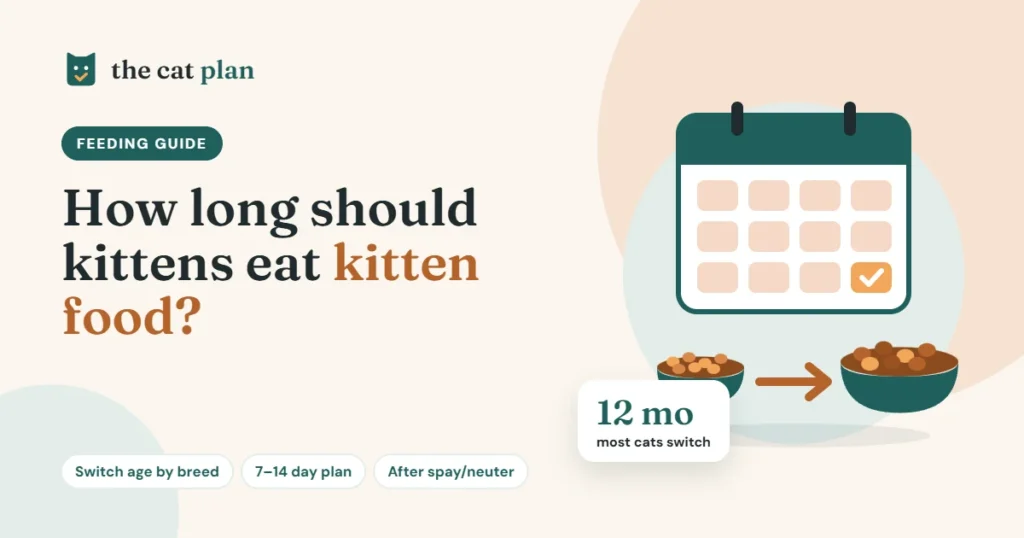
Most kittens should eat kitten food until about 12 months old, and large breeds like Maine Coons until 18 months to 2 years. Here’s how to tell when your kitten is ready, what changes after spaying or neutering, and a 7–14 day plan to switch to adult food.
How often and how much to feed a kitten at every age, with a chart, sample daily timetables and the red flags that need a vet.

Eight kitten foods compared on what actually matters: the AAFCO growth statement, dry-matter protein, calories and how much to feed.
Get calories, portions and a schedule for your kitten’s exact age and weight.